
 At the April AGM meeting Peter Cadogan showed the entries for this years astro-photo competition for the Dan Turton trophy.
As many members were not able to attend that night, and not able to view or vote, those who did not vote on the night can view the pictures in the Showcase 2015 gallery, and vote by emailing your 1st, 2nd and 3rd choice favourite pictures to Peter Cadogan (coordinator@cotswoldas.org.uk). Please use the number on the image slide. Voting is open until Sunday 26th April.
The Showcase gallery images are generated from Peter’s powerpoint and are a somewhat downscaled from the originals – so apologies to the imagers that their images may not be the best quality possible.



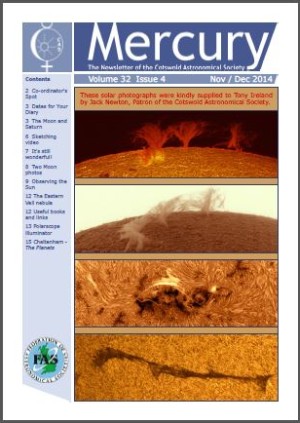 The November/December Mercury is now available for download.
 The September/October Mercury is now available for download.
 The July/August Mercury is now available for download.